
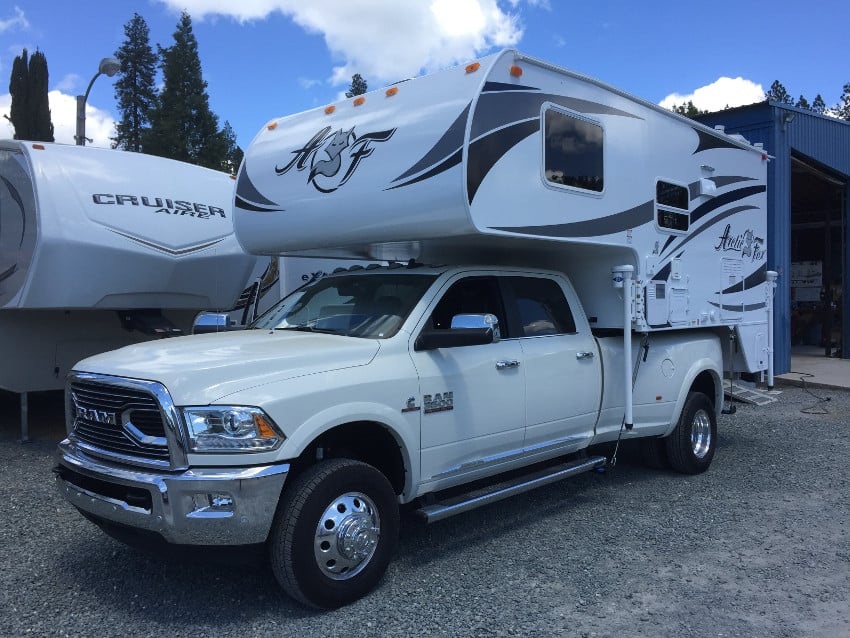
Not every camper needs a hitch. A truck camper sits in the bed of a pickup and turns the vehicle you already drive into the place you sleep. That setup appeals to hunters, anglers, and anyone who wants to leave a trailer at home.
If you are looking at truck campers for sale in New York, start with the truck, not the camper’s kitchen. Payload, bed length, and cab configuration decide whether the unit is safe. A camper that looks compact on the lot can still exceed the ratings on the door sticker. That is the most common mistake first-time slide-in buyers make.
Why Shoppers Consider a Truck Camper
These units work when you want:
- Off-pavement access without dragging a trailer
- A smaller storage footprint at home
- The ability to drop the camper and use the truck during the week
- A simpler campsite setup than a 30-foot travel trailer
They are a weaker fit if you need a full bunkhouse, a large bathroom, or standing room for a whole family. Most truck campers are efficient, not spacious. Cooking for four in a slide-in is possible. Living that way every weekend is a different question.
Think about how you camp in November and December too. A hard-sided camper handles cold better than a pop-up shell. If your season ends at deer camp, insulation and a reliable furnace matter more than a huge dinette.
Match the Camper to the Truck
Confirm:
- Payload capacity after passengers and gear
- Bed length and whether you need a long bed
- Suspension and rear-end strength
- Tie-down system and jack compatibility
- Center of gravity and how the camper sits on the rails
Hard-side campers give more weather protection and insulation. Pop-up truck campers save weight and garage height. Both still need a truck that can carry them.
Also think about where you will store the camper when it is off the truck. Jacks, a clean level pad, and a plan for snow load matter in New York. A camper left on jacks in soft ground will not stay level after a thaw.
What to Inspect on Used Units
Used truck campers can be strong values if the shell and seals are sound.
Check:
- Roof and front cap for cracks
- Window and door seals
- Floor around the bath and dinette
- Jacks and mounting hardware
- Furnace, stove, and water system
- Weight sticker versus your truck’s payload
Ask how the previous owner loaded and stored it. A camper that sat wet and uncovered ages faster than one that was kept dry. Look at the tie-down points and the jack feet. Those parts take abuse every time the unit comes off the truck.
Seeing Truck Campers at Wilkins RV
Wilkins RV includes truck campers in its mix of towables and motorized units. That lets you compare a slide-in camper with a small travel trailer in the same visit. Bring the truck if you can. Numbers on paper are less convincing than seeing the camper over the rear axle.
November buyers should also plan winterization and off-season storage. A slide-in unit still has plumbing and a roof. If you buy now and will not hunt or travel again until spring, schedule that prep before the first hard freeze.
Buy the Camper Your Truck Can Carry
A truck camper is only a good deal if the pickup can hold it when loaded. Visit Wilkins RV with your payload numbers, walk a few shells, and choose a unit that leaves margin instead of using every pound on the sticker.
Wilkins RV Locations: Bath • Brewerton • Churchville • Syracuse/Cicero • Nichols • Waterloo